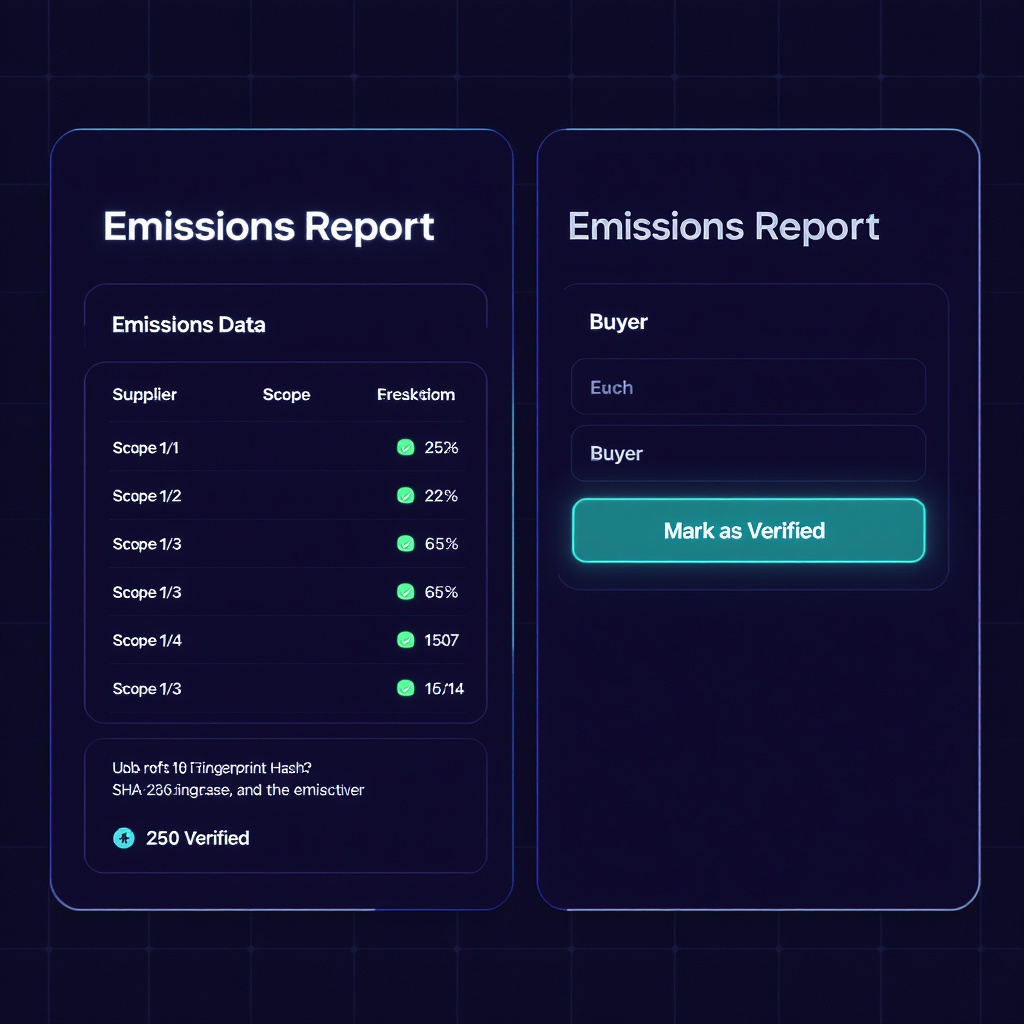
Buyer's view: Scope 1/2/3 totals, emission factor sources, SHA-256 fingerprint, and a one-click verification action.
Every Emissa report comes with a unique, read-only verification URL. Send it to your Walmart, Costco, Target, or Apple procurement contact. They see source data, methodology, and a SHA-256 fingerprint — and can formally mark the report verified on the record.
Buyer's view: Scope 1/2/3 totals, emission factor sources, SHA-256 fingerprint, and a one-click verification action.
The whole verification workflow runs inside Emissa — supplier generates the report, buyer accesses the link, everyone moves on.
You import your QuickBooks data, Emissa maps Scope 1/2/3, and you click Generate. Every format — Walmart Gigaton, Costco SSA, Apple SAQ — produces a unique verification URL alongside the report PDF.
emissa.tech/verify/rpt_a4f3b...
You paste the link into an email or drop it in your Walmart/Costco supplier portal message. No login required on the buyer's side — the link is read-only and report-specific. Nothing can be edited through it.
The buyer sees Scope 1/2/3 totals, the category breakdown, emission factor citations (EPA eGRID, GHGRP, USEEIO), source file references, and the report's SHA-256 fingerprint. One click logs a timestamped "Verified" entry — attached to the report forever.
No spreadsheet attachments. No follow-up emails asking "which version is this?" The verification portal surfaces all the detail a procurement sustainability team cares about.
Every emissions total is broken down to the source transaction category. Buyers see how your Scope 3 Cat 1 number was computed — not just the final figure.
The portal shows which QuickBooks export or data file the report was generated from — with upload timestamp — so there's no ambiguity about data vintage.
Emission factors are cited by name and version (EPA eGRID 2023, USEEIO v2.0, GHGRP). The methodology note explains spend-based vs. activity-based calculation for each category.
A cryptographic hash of the report data is displayed on the page. If any number has been altered since generation, the hash will not match — giving buyers an objective tamper signal.
When the buyer clicks "Mark as Verified," a timestamped entry is permanently logged: buyer email, organization, IP, and date. That badge appears on future verification page loads.
Buyers can submit a clarification question directly from the portal. It routes to the supplier's inbox as a formatted email — no hunting for contact details, no lost threads.
Each buyer runs a different compliance program with different data fields. Emissa generates a format-matched verification portal for each one.
Gigaton requires Scope 1, 2 & 3 with Giga Guru status documentation. The verification portal shows factor-sourced totals that the Walmart sustainability team can validate without a call.
Walmart Gigaton guide →Costco's SSA process is annual and includes supply chain emissions. The verification link lets Costco auditors confirm supplier data independently — reducing audit cycle time.
Target's SSA asks for Scope 3 Cat 1 & 4 detail. The verification portal surfaces exactly those categories with EPA factor citations — everything the Target team needs in one click.
Apple's SAQ is granular. The verification portal includes the data quality narrative and calculation detail — the documentation Apple's supplier responsibility team checks against submissions.
Most supplier sustainability questionnaires are answered in email threads and spreadsheet attachments. A buyer has no way to know if the number in row 14 of column F came from an audited file or a rough estimate. The verification portal changes that. Buyers get a URL they can click any time, a fingerprint they can verify, and a logged confirmation they can attach to their own audit file — without scheduling a call or chasing an email.
How buyer verification works — and why it matters for your next audit cycle.
A buyer verification portal is a secure, read-only view of a supplier's emissions report that a procurement buyer can access without a shared login. The buyer sees the underlying source data, calculation methodology, emission factor citations, and a SHA-256 report fingerprint — and can formally mark the report as verified on the record. Emissa generates this portal automatically for every report.
When a supplier generates an emissions report in Emissa, the platform creates a unique, read-only verification URL. The supplier copies that link and sends it to their buyer. The buyer opens the URL — no account required — and sees the full Scope 1/2/3 breakdown, source file references, emission factors used, and a SHA-256 fingerprint. They can click "Mark as Verified" to log a timestamped confirmation, or submit a clarification request that goes directly to the supplier's inbox.
No. The verification portal is publicly accessible via a secure link — no login, no account creation, no software purchase required on the buyer's side. The link is report-specific and read-only; buyers cannot edit anything.
Each report is assigned a SHA-256 cryptographic fingerprint at generation time. The fingerprint is displayed on the verification page and can be independently recomputed from the report data. If any figure has changed since generation, the hash will not match — giving buyers an objective tamper-evident signal without relying on anyone's word.
Yes — any procurement team can access the portal via the unique link. Emissa currently generates report formats aligned with Walmart Project Gigaton, Costco Sustainability Audit, Target SSA, Apple Supplier SAQ, EcoVadis, CDP Climate Change, and SBTi. The verification portal is attached to every format, so a supplier can share a Walmart-formatted report with their Walmart buyer and a Costco-formatted report with their Costco buyer — each with its own verification URL.
The sample report page shows a real buyer verification portal for a mock Walmart supplier — complete with Scope 1/2/3 data, SHA-256 fingerprint, and the "Mark as Verified" flow. Or book a 20-minute assessment to see it with your own data.